Bill Pickett: The Iconic African American Cowboy Who Transformed Rodeo
#image_title
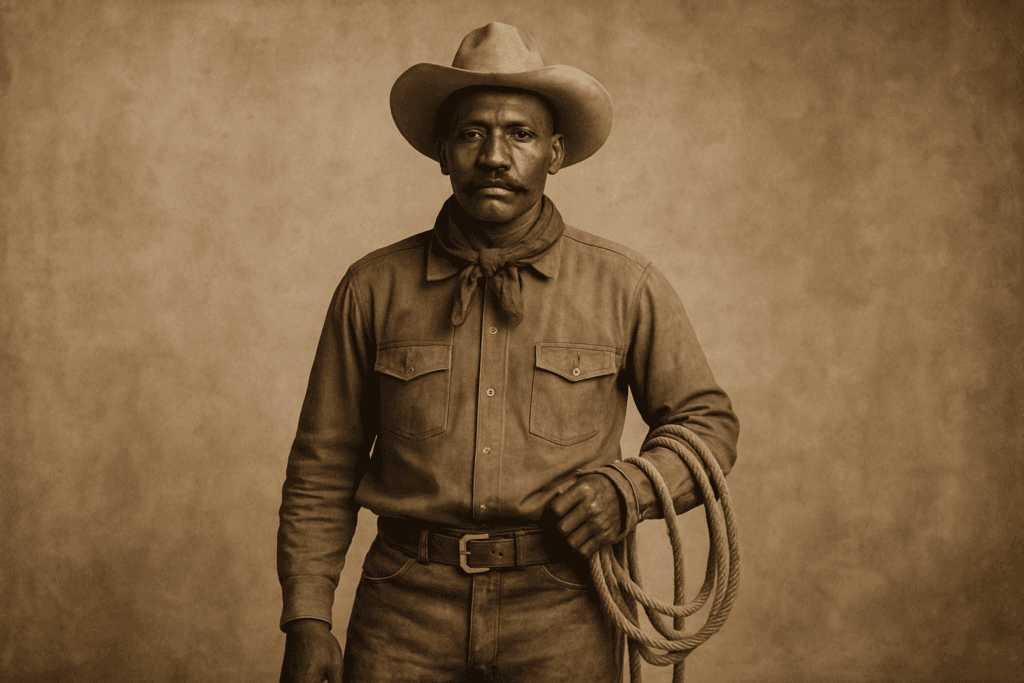
The dust swirled beneath the blazing Texas sun as thousands packed the rodeo arena, their eyes fixed on the spectacle unfolding at its center. In one electrifying moment, Bill Pickett surged forward, his horse thundering beneath him. With unmatched agility, he launched himself from the saddle, landing squarely onto the back of a wild, bucking steer. The animal bellowed and twisted, but Pickett held fast, his hands and teeth working in tandem to subdue the beast. The crowd erupted—some in disbelief, others in unbridled admiration—as Bill Pickett, a Black cowboy from humble roots, delivered yet another unforgettable performance. The question lingers in the air: how did this son of formerly enslaved parents rise above the barriers of his time to become an international rodeo sensation? Pickett’s story is one of courage, ingenuity, and resilience, yet history all too often relegates pioneers like him to the footnotes. It’s time to shine a spotlight on the untold legends who helped shape the American West—starting with the remarkable legacy of Bill Pickett.
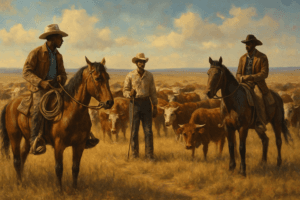
Bill Pickett was born in 1870 in Texas, the son of formerly enslaved parents. Growing up amid the rolling plains and cattle ranches of the post-Civil War South, Pickett’s childhood was shaped by both hardship and resilience. He was one of thirteen children, and from a young age, he learned to work closely with animals, developing skills that would one day bring him national fame. During this era, the American West was a land of opportunity and challenge, and Black cowboys like Pickett played a vital yet often overlooked role in its development. Despite making up as much as a quarter of all working cowboys, African Americans faced relentless discrimination, both on and off the ranch. Segregation laws, limited economic opportunities, and social prejudice created barriers that made it difficult for Black cowboys to gain recognition or advancement, even as their labor and expertise were essential to the cattle industry.
Amid these challenges, Bill Pickett distinguished himself through ingenuity and daring. He became famous for inventing a bold new rodeo technique known as “bulldogging”—what we now call steer wrestling. Inspired by observing how trained bulldogs would bring down stray cattle, Pickett developed a method that involved jumping from his horse onto a steer and subduing it by biting its upper lip—a move that stunned live audiences and set him apart from his peers. His performances were not only a testament to his physical skill and creativity, but also a way to break through racial barriers, as Pickett became the first Black cowboy inducted into the National Rodeo Hall of Fame.
Today, Bill Pickett’s story is more than a chapter in rodeo history; it is a powerful reminder of the contributions and resilience of Black cowboys in shaping the American West. At a time when their legacy is often overshadowed or forgotten, revisiting Pickett’s achievements helps to restore a fuller, more inclusive narrative. The story of Bill Pickett matters—not only for his remarkable accomplishments, but for what it reveals about the enduring spirit and impact of Black cowboys, whose legacy continues to inspire new generations.
Bill Pickett’s journey began on a ranch in Travis County, Texas, where he was born in 1870 to formerly enslaved parents. Growing up as one of thirteen children, Pickett learned to ride, rope, and handle cattle from a young age, developing a deep understanding of ranch life and livestock. Despite the many challenges posed by racial prejudice and limited opportunities for Black cowboys in the post-Reconstruction South, Pickett’s determination and skill set him apart early on. He faced discrimination in both daily life and the burgeoning rodeo scene, but persisted, honing his craft and building a reputation for his grit and ingenuity.
Pickett’s most significant contribution to rodeo was the invention of “bulldogging,” now known as steer wrestling. Inspired by watching bulldogs subdue unruly cattle by biting their lips, Pickett studied their technique and adapted it for human use. Rather than relying solely on strength, he would leap from his horse onto a running steer, bite its upper lip, and wrestle it to the ground—a daring spectacle that quickly captivated audiences. His unique method was both effective and entertaining, setting him apart from his peers and leaving an indelible mark on the sport. Early demonstrations of bulldogging drew awe and skepticism from the rodeo community, but Pickett’s consistent success soon won over even the staunchest critics.
Pickett’s fame soared after he joined the renowned 101 Ranch Wild West Show, where he performed alongside some of the era’s most celebrated figures. He traveled extensively, showcasing his skills throughout the United States and even in international exhibitions. Despite his celebrity, Pickett continued to face the harsh realities of segregation, often being denied entry or forced to compete under an assumed identity. Nevertheless, his presence in the arena often led to the integration of competitions, as his talent could not be ignored. He became a role model for other Black cowboys, helping to popularize rodeo as a professional sport and forging lasting friendships and rivalries within the community.
Pickett’s legacy endures in the rodeo world and beyond. His innovative techniques and sportsmanship set new standards, and he was posthumously inducted into the Pro Rodeo Hall of Fame. The Bill Pickett Invitational Rodeo, established in his honor, continues to celebrate the contributions of Black cowboys and cowgirls. His life has been depicted in books, films, and other media, ensuring that his story remains a vital part of American history. Today, Bill Pickett stands as a symbol of resilience and excellence, and his legacy serves as a reminder of the profound impact Black cowboys have had on the culture and history of the American West.
Bill Pickett’s legacy is woven deep into the fabric of American history and the story of the West. As a pioneering Black cowboy and the inventor of the bulldogging technique, Pickett’s daring spirit and ingenuity forever transformed the world of rodeo. From humble beginnings in Texas, he rose to national fame, breaking barriers and captivating audiences with his unique skills and charisma. His contributions did not just change the way rodeo was performed—they challenged the prevailing narratives of who could be a cowboy and expanded the definition of American heroism. Pickett’s life was a testament to resilience, creativity, and the relentless pursuit of excellence, even in the face of discrimination and adversity.
Yet, for decades, Bill Pickett’s remarkable story was nearly lost to history, a casualty of the broader erasure of Black contributions to the American West. The mythic image of the cowboy has often been painted in narrow terms, overlooking the crucial roles played by Black, Native, Latino, and other diverse cowboys who shaped the frontier. Pickett’s rediscovery and celebration remind us that the American story is richer and more complex than the stereotypes suggest. Honoring his memory means acknowledging both the achievements and the struggles of those whose stories were marginalized or forgotten.
As we reflect on Bill Pickett’s enduring impact, let us be inspired to seek out and support the full spectrum of Western heritage. Attend Black rodeo events, read and share the stories of overlooked heroes, and advocate for the inclusion of all voices in our history books and cultural celebrations. In doing so, we not only pay tribute to Pickett but also help ensure that future generations recognize and celebrate the diversity at the heart of the American experience.
Bill Pickett once said, “The greatest thing you can do is to be yourself in this world, and do it well.” His courage, innovation, and authenticity continue to inspire people from all walks of life. Remembering Bill Pickett is not just about honoring a legendary cowboy—it’s about embracing the true, untold spirit of the West and ensuring that every trailblazer, regardless of background, finds their rightful place in our collective memory.
About The Author